Szerj Systemsszerj.systems
Printed from szerj.systems · Digital systems for founder-led businesses · contact@szerj.systems
If the current site looks acceptable and still does not produce enough good inquiries, the problem is usually structural. This work fixes the page hierarchy, the mobile experience and the trust gaps before they cost you more calls.
This one does need an existing site — a redesign has to have something to replace. If there is nothing built yet, the work is a build rather than a redesign, and it is a different page.
A site stops fitting a business gradually. Services get added to a structure that was not designed for them, pages accumulate that nobody has a reason to keep, and the path a buyer is supposed to take stops being obvious to anyone except the people who built it.
The service the business actually leads with is three clicks in
Pages exist that nobody can name a purpose for
The mobile version is the desktop version, squeezed
Every page ends somewhere different, or nowhere
Each line below is something the work produces. None of them is a promise about how much more business follows — that depends on demand, on the market and on what you sell, and a website does not manufacture any of the three.
One hierarchy, built around how the company actually sells today
Dead pages removed rather than restyled
A structure that reads the same on a phone as on a desktop
One next step, in the same place, on every page
Measurement that survives the move, so the before and after are comparable
Scope is set by what the business actually needs, so this is the shape of the work rather than a fixed package. The second column is the part most pages leave out.
A read of the current site, page by page, before anything is proposed
A revised site map and page hierarchy
Redesigned templates for the core page types
Content carried over, rewritten or retired — decided page by page
Redirects, so the search equity the old URLs earned is not thrown away
Measurement set up before launch, so the change can be read afterwards
A visual reskin that leaves the structure as it is
Rewriting a site that is structurally sound and just needs specific fixes
Ongoing content marketing
Any promise about where the redesigned site will rank
The standard a rebuild is aimed at — identity, page structure and an inquiry path built to work as one system rather than three things bolted together.

Niko was running on Booksy and word of mouth, with no site and no identity of his own. Now there is a full visual identity, a custom site, and a booking path built around the standard of the work.
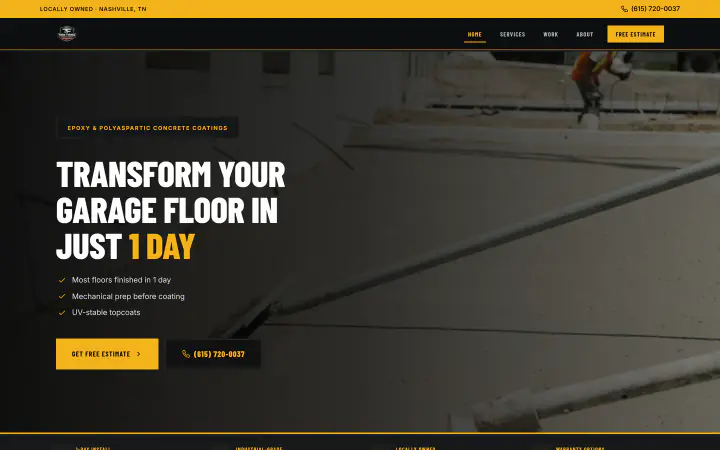
True Finish had no brand and no website. We built both, plus the quote path buyers use to reach them and the tracking that shows where each quote request came from.
This studio runs one sequence. What changes between one engagement and the next is how much happens in each stage — not the stages, and not their order.
The existing site is read: what each page is for, where visitors leave, and what the analytics and the inbox already say.
What the new structure has to do that the current one does not, and which pages earn their place in it.
The revised site map, the templates, and the redirect map from every old URL.
The new templates, built and populated, with content decided page by page.
Redirects tested, tracking confirmed, and the inquiry path walked end to end before the switch.
Hierarchy, then buyer confidence, then the conversion logic. Cosmetic polish is the last thing that should move, and it is usually the first thing a redesign spends its budget on.
The pages closest to this one. Same kind of question, different answer.
What a new site for a local service business actually has to do.
One page, one offer, built for traffic you are paying for.
When the current site no longer matches what the business sells, when the structure is what is getting in the way rather than any single page, or when the mobile experience is an afterthought. If the structure is basically sound and specific pages are underperforming, targeted conversion work is cheaper and faster than a redesign.
It can, if it improves service-page clarity, hierarchy, internal links and the local-business context — and if the redirects are done properly. It can also hurt them badly if they are not. Nobody can promise a ranking, and a redesign that is sold on one should be treated with suspicion.
That is what the Existing System Diagnostic is for. It is a structured read of the site you have, and it ends with a written recommendation about what to do first — which is sometimes a redesign and is often something smaller.
This one does need an existing site — a redesign has to have something to replace. If there is nothing built yet, the work is a build rather than a redesign, and it is a different page.